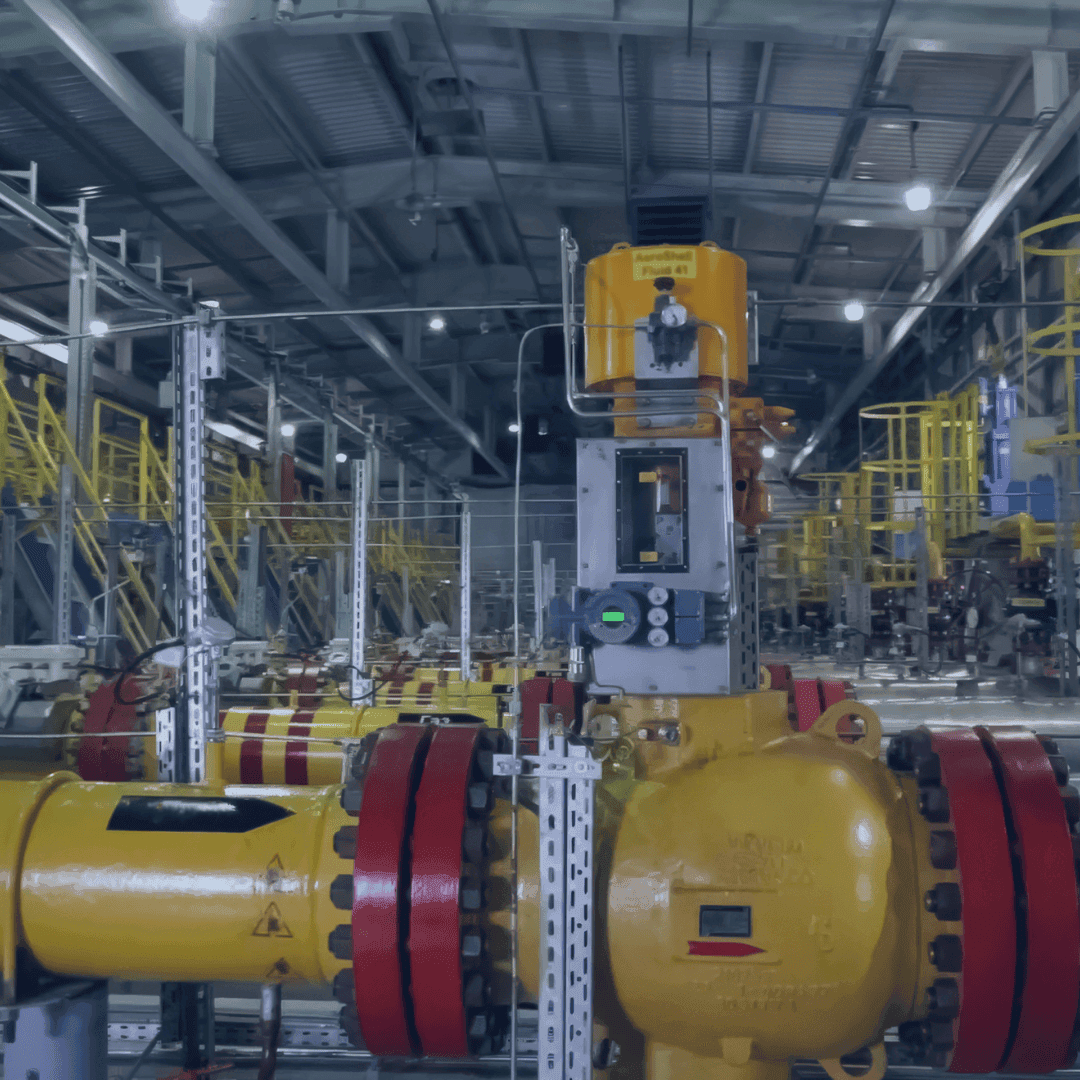
Gas Processing Plant Operations
1 Weeks
Professional Level
Certificate Included
| City | Date | Price | Status |
|---|---|---|---|
AmsterdamNetherlands | October 9, 2026 | €4,900 | Confirmed date |
Kuala LumpurMalaysia | November 20, 2026 | €4,800 | Confirmed date |
OnlineOnline | December 31, 2026 | €2,400 | Confirmed date |
TunisTunis | February 11, 2027 | €4,400 | Confirmed date |
GenevaSwitzerland | March 25, 2027 | €4,900 | Confirmed date |
LisbonPortugal | May 6, 2027 | €4,800 | Confirmed date |
Duration
1 Weeks
Category
Oil & Gas
Level
Professional Level
Certificate
Included
Gas Processing Plant Operations is a strategic capability that directly shapes operational reliability, product quality, safety performance, and commercial uptime across the gas value chain. This course equips professionals to run and optimize processing facilities with disciplined operational control, clear decision accountability, and risk-informed judgment that leaders expect in high-consequence environments. Participants will connect process fundamentals to day-to-day plant execution, strengthen the ability to stabilize operations under changing feed conditions, and apply practical performance targets that can be measured and achieved within defined timeframes and constraints. The program addresses real operational challenges such as process upsets, equipment reliability, utility constraints, contamination risks, energy intensity, and emissions management, while also highlighting opportunities to improve profitability through yield optimization, loss reduction, and smarter operating envelopes. With a strong focus on leadership-ready operational thinking, the course builds the competence to translate plant data into actionable priorities, align cross-functional teams, and sustain consistent results through standardized routines, disciplined shift handover, and continuous improvement practices.
Operations and production supervisors, control room operators, field operators, process engineers, production engineers, maintenance and reliability engineers, rotating equipment specialists, HSE professionals supporting process safety, commissioning and start-up teams, plant performance and energy management staff, and managers responsible for operational excellence and facility integrity.
Reduced unplanned downtime through stronger operational discipline and upset response capability.
Improved safety performance by reinforcing process safety behaviors and deviation control.
Higher product quality consistency through better control of treating and separation.
Lower operating cost via energy efficiency and utilities optimization practices.
Stronger asset reliability through improved operator care and early-warning decision routines.
Better leadership alignment across shifts with standardized handover and KPI-driven execution.
Greater confidence operating complex gas processing systems under variable conditions.
Faster, more accurate troubleshooting skills for process and equipment upsets.
Clear understanding of plant KPIs and how to drive measurable improvements.
Practical capability to support start-ups, shutdowns, and operating envelope changes.
Stronger communication and shift handover habits that reduce errors and rework.
Career-relevant competence in safe, efficient, and reliable plant operations.
Duration: 1 Weeks
Duration: 5 days
Format: Classroom / Online / Blended
“The training will be delivered by a team of experts specialized in negotiation and professional relationships. They have extensive practical experience in managing complex negotiations, as well as a strong record in delivering leadership and management development programs.”
This course positions plant professionals to deliver safer, steadier, and more profitable gas processing operations by combining technical operational excellence with leadership-grade execution discipline. By strengthening troubleshooting capability, operating envelope control, reliability behaviors, and KPI-driven decision-making, participants will be prepared to reduce avoidable losses, protect asset integrity, and maintain product quality under real operational pressures. The result is an operations team that acts earlier, communicates clearer, and sustains performance with measurable outcomes that leaders can trust and scale across shifts and facilities.
Gas Processing Plant Operations
Register for Course