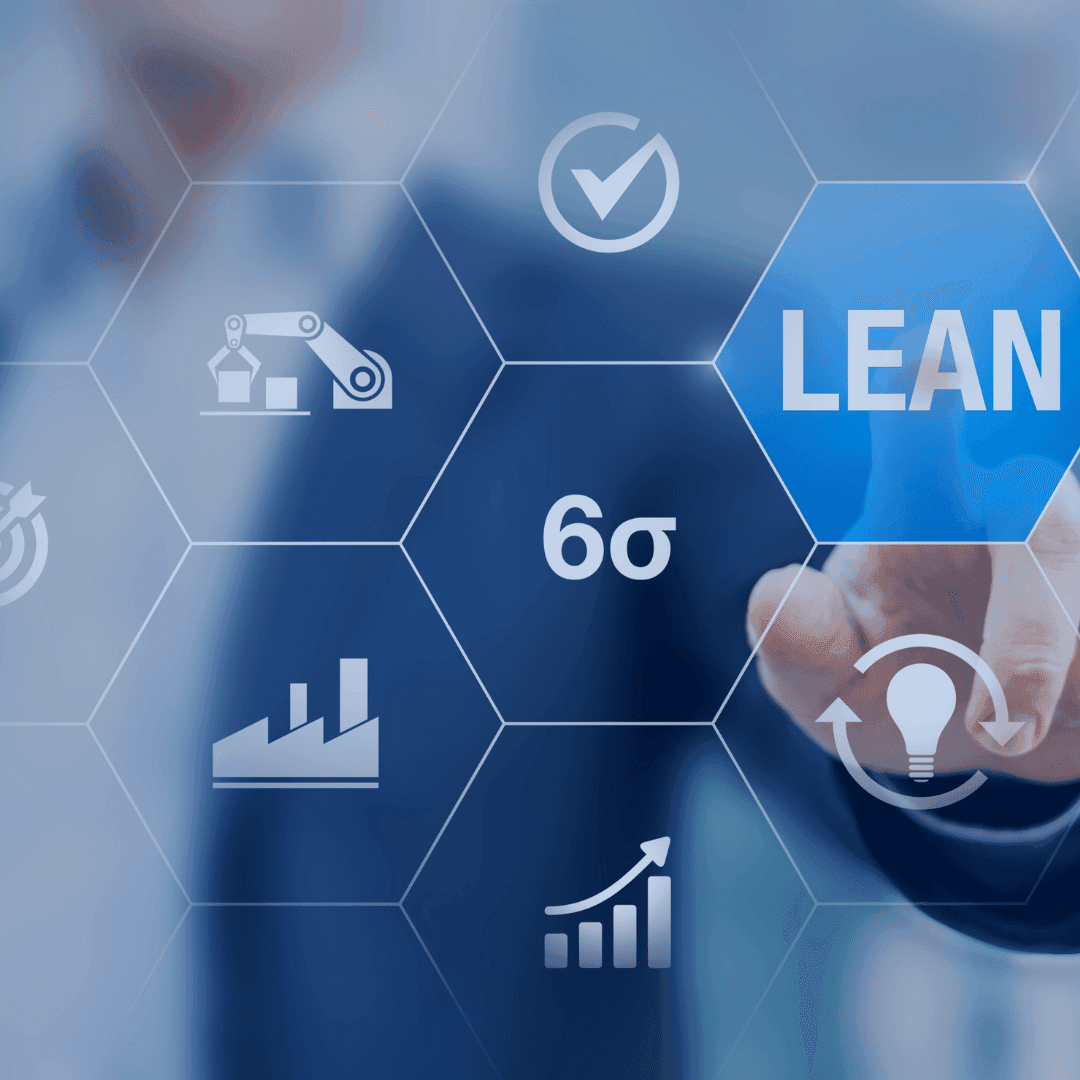
Lean Six Sigma Green Belt

Lean Six Sigma Green Belt

1 Weeks
Professional Level
Certificate Included
Course Content

Available Events

Available Events
CityDatePriceStatus
DubaiUnited Arab Emirates
September 16, 2026
€5,100
Confirmed date
IstanbulTurkey
September 20, 2026
€4,900
Confirmed date
SingaporeSingapore
September 21, 2026
€5,100
Confirmed date
OnlineOnline
October 18, 2026
€4,300
Confirmed date
GenevaSwitzerland
October 19, 2026
€4,900
Confirmed date
Kuala LumpurMalaysia
October 30, 2026
€4,800
Confirmed date
AmsterdamNetherlands
November 25, 2026
€4,900
Confirmed date
LisbonPortugal
November 30, 2026
€4,800
Confirmed date

Course Information

Duration

1 Weeks

Category

CERTIFICATION COURSES

Level

Professional Level

Certificate

Included

INTRODUCTION

Lean Six Sigma Green Belt provides professionals with a structured approach to improving quality, efficiency, and business performance across different industries. Organizations today face increasing pressure to deliver faster services, reduce errors, control costs, and maintain consistent customer value. This course introduces participants to the core principles of Lean thinking and Six Sigma methodology in a practical and business-oriented way. Participants explore how processes work, how waste appears, how variation affects outcomes, and how improvement opportunities can be prioritized. The course explains the DMAIC cycle as a disciplined framework for defining problems, measuring performance, analyzing root causes, improving solutions, and controlling gains. It also emphasizes the importance of evidence-based decisions rather than assumptions or temporary fixes. Participants will work with process maps, performance metrics, problem-solving tools, statistical concepts, and improvement plans that can be applied immediately at work. The training is designed for professionals who want to lead or support improvement projects without requiring advanced statistical expertise. By the end of the program, participants will understand how Lean Six Sigma Green Belt skills can create measurable value for teams, departments, and organizations.

COURSE OBJECTIVES

Participants will achieve the following objectives by this course:

  • Understand the principles of Lean Six Sigma and their role in organizational performance improvement.
  • Apply the DMAIC methodology to structure improvement projects from problem definition to control.
  • Identify process waste, inefficiencies, bottlenecks, defects, and sources of performance variation.
  • Develop clear project charters, problem statements, objectives, scope definitions, and stakeholder plans.
  • Use process mapping tools to visualize workflows, value streams, handoffs, and improvement opportunities.
  • Measure process performance using relevant metrics, data collection plans, and baseline analysis.
  • Analyze root causes using structured problem-solving techniques and evidence-based investigation methods.
  • Select and implement practical improvement solutions that reduce waste and improve process capability.
  • Establish control plans, monitoring systems, and standard work practices to sustain improvements.
  • Communicate improvement findings, project outcomes, and business benefits to stakeholders effectively.

TARGET AUDIENCE

This program targets a professional audience seeking to improve knowledge and skills:

  • Quality professionals responsible for process improvement, defect reduction, and operational excellence initiatives.
  • Operations managers seeking structured tools to improve productivity, workflow efficiency, and service reliability.
  • Project managers involved in performance improvement, business transformation, or cross-functional change projects.
  • Engineers, analysts, supervisors, and team leaders managing processes, teams, data, or improvement activities.
  • Professionals in manufacturing, healthcare, logistics, finance, administration, customer service, and technology environments.
  • Business improvement specialists preparing for Lean Six Sigma Green Belt responsibilities or certification readiness.
  • Executives and department heads seeking practical methods to support continuous improvement culture.
  • Employees nominated to participate in improvement projects and contribute measurable organizational value.

COURSE OUTLINE

Day 1: Lean Six Sigma Foundations and Project Definition

  • Understand Lean Six Sigma concepts, principles, roles, and business value.
  • Compare Lean waste reduction with Six Sigma variation reduction.
  • Explore Green Belt responsibilities within improvement project structures.
  • Identify customers, requirements, expectations, and critical quality factors.
  • Define improvement opportunities using business priorities and process pain points.
  • Develop project charters with scope, objectives, timelines, and stakeholders.
  • Write effective problem statements supported by measurable evidence.
  • Understand the DMAIC roadmap and project governance expectations.

Day 2: Process Mapping, Measurement, and Baseline Performance

  • Map current processes using flowcharts and value stream thinking.
  • Identify process inputs, outputs, suppliers, customers, and key requirements.
  • Recognize waste types affecting time, cost, quality, and customer experience.
  • Develop data collection plans aligned with project objectives.
  • Select meaningful process metrics and performance indicators.
  • Understand baseline measurement and current capability assessment.
  • Review data quality, sampling principles, and measurement consistency.
  • Interpret simple charts to understand patterns, trends, and performance gaps.

Day 3: Root Cause Analysis and Data-Driven Problem Solving

  • Analyze process performance using structured investigation techniques.
  • Apply cause-and-effect diagrams to identify potential root causes.
  • Use the five whys method to explore underlying process failures.
  • Prioritize causes using evidence, impact, frequency, and feasibility.
  • Understand basic variation concepts and their operational implications.
  • Distinguish common causes from special causes in process behavior.
  • Use Pareto analysis to focus improvement efforts strategically.
  • Validate root causes before designing improvement solutions.

Day 4: Improvement Design, Solution Selection, and Implementation

  • Generate practical improvement ideas through structured team collaboration.
  • Evaluate solutions using impact, effort, risk, and resource requirements.
  • Apply Lean tools to reduce delays, rework, errors, and unnecessary steps.
  • Design future-state processes focused on value and flow.
  • Develop implementation plans with owners, actions, timelines, and measures.
  • Manage change resistance through communication and stakeholder engagement.
  • Pilot improvement solutions before wider implementation.
  • Measure improvement results against baseline performance and project goals.

Day 5: Control, Sustainability, Reporting, and Certification Readiness

  • Develop control plans to sustain performance improvements.
  • Standardize improved processes using procedures, checklists, and visual controls.
  • Establish monitoring indicators for ongoing process stability.
  • Document lessons learned, risks, benefits, and improvement outcomes.
  • Communicate project results using clear business-focused reporting.
  • Review Green Belt knowledge areas and examination preparation priorities.
  • Practice applying tools across realistic business improvement scenarios.
  • Create an action plan for workplace implementation after training.

COURSE DURATION

Duration: 1 Weeks

The recommended duration for the Lean Six Sigma Green Belt course is five training days, with a balanced structure combining instructor-led learning, practical exercises, applied case discussions, process improvement examples, and project-based activities. The program can be delivered in classroom, online, or blended formats depending on organizational needs and participant availability. Each day focuses on a specific stage of the Lean Six Sigma improvement journey, allowing participants to progress from foundational concepts to practical application, sustainability planning, and certification readiness.

INSTRUCTOR INFORMATION

The training will be delivered by a team of experts specialized in Lean Six Sigma, quality management, operational excellence, process improvement, data-driven problem solving, and organizational performance transformation. The instructors bring practical experience in leading improvement projects across multiple industries and are skilled at translating technical methods into clear, actionable learning for professionals, managers, and project teams. Their approach combines structured explanation, real-world examples, guided exercises, and practical discussion to ensure participants can confidently apply Green Belt tools in their workplace.

FREQUENTLY ASKED QUESTIONS

Professionals involved in quality, operations, project management, engineering, service delivery, analysis, supervision, or continuous improvement should attend.

CONCLUSION

Lean Six Sigma Green Belt is a valuable professional course for individuals and organizations seeking practical process improvement capability. It provides participants with structured tools to define problems, measure performance, analyze causes, implement improvements, and sustain results. The program strengthens both technical understanding and business-focused problem-solving skills. It helps organizations build a culture of continuous improvement supported by data, teamwork, and measurable outcomes. Participants leave prepared to contribute confidently to improvement projects and deliver stronger operational value.

Lean Six Sigma Green Belt

Register for Course