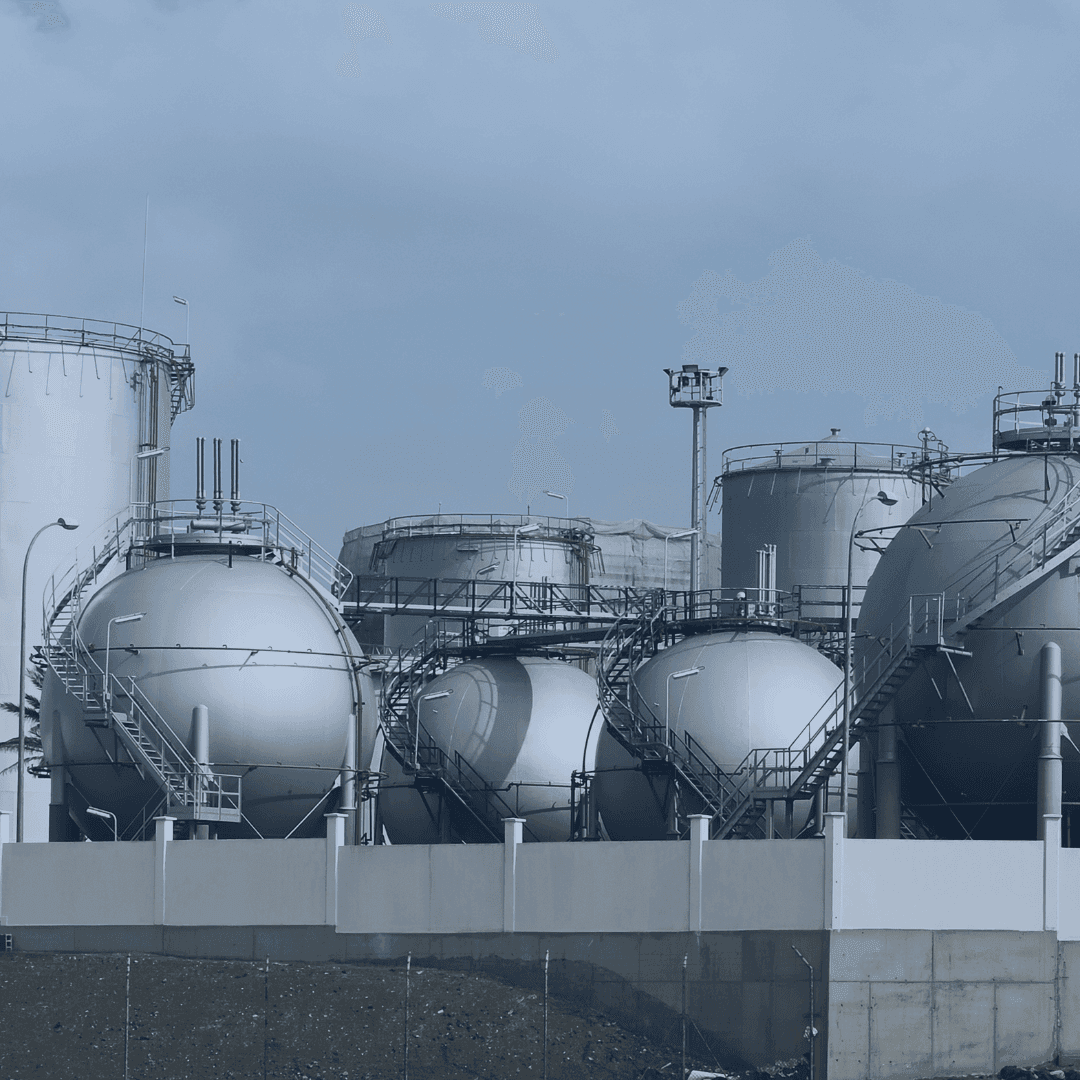
LNG Storage And Transportation Systems

LNG Storage And Transportation Systems

1 Weeks
Professional Level
Certificate Included
Course Content

Available Events

Available Events
CityDatePriceStatus
AmsterdamNetherlands
October 9, 2026
€4,900
Confirmed date
Kuala LumpurMalaysia
November 20, 2026
€4,800
Confirmed date
OnlineOnline
December 31, 2026
€2,400
Confirmed date
TunisTunis
February 11, 2027
€4,400
Confirmed date
GenevaSwitzerland
March 25, 2027
€4,900
Confirmed date
LisbonPortugal
May 6, 2027
€4,800
Confirmed date

Course Information

Duration

1 Weeks

Category

Oil & Gas

Level

Professional Level

Certificate

Included

Introduction

LNG Storage & Transportation Systems sit at the intersection of asset integrity, operational continuity, risk governance, and long-term energy resilience, making them a critical capability for organizations managing high-value infrastructure and complex supply chains. Effective LNG storage and logistics demand disciplined decision-making across design, operations, maintenance, marine interfaces, trucking and rail movements, and emergency readiness—while meeting strict safety, reliability, and performance expectations. Leaders must balance competing priorities: protecting people and assets, ensuring availability, reducing losses and boil-off impacts, maintaining product quality, and controlling lifecycle costs under variable demand and constrained capacity. This course equips professionals to translate technical requirements into executable operational plans, measurable performance controls, and auditable compliance practices. It addresses real-world challenges such as cryogenic hazards, containment integrity, transfer system reliability, human factors, contractor management, and incident prevention, while also highlighting opportunities to improve uptime, optimize scheduling and inventory, strengthen vendor performance, and elevate organizational readiness through structured governance and practical operational excellence.

Course Objectives

  • Evaluate LNG value chain interfaces to identify storage and transportation constraints and quantify operational risks.
  • Differentiate LNG storage tank types and containment philosophies to select fit-for-purpose solutions for defined duty cycles.
  • Apply cryogenic safety principles to reduce exposure scenarios and verify critical controls through measurable checklists.
  • Design transfer and loading/unloading workflows to improve throughput, minimize losses, and increase schedule reliability.
  • Implement inspection and integrity plans to extend asset life and track leading indicators for containment performance.
  • Optimize boil-off gas management strategies to lower losses and stabilize product conditions within operating limits.
  • Develop emergency response and incident management playbooks to improve response times and validate readiness via drills.
  • Establish governance, competency, and contractor controls to raise compliance performance and reduce operational variability.
  • Use performance dashboards to monitor KPIs and drive corrective actions with clear accountability and timelines.

Target Audience

  • LNG terminal and facility managers responsible for storage availability, safety performance, and continuity
  • Operations, maintenance, and reliability engineers managing cryogenic assets and transfer systems
  • Marine, shipping, and jetty interface teams overseeing LNG carriers, berthing, and loading operations
  • Logistics and dispatch leaders managing road, rail, and intermodal LNG distribution
  • HSE, process safety, and risk professionals strengthening control assurance and emergency readiness
  • Project, commissioning, and start-up teams preparing new LNG storage and loading infrastructure
  • Quality and compliance managers responsible for procedures, audits, and operational governance
  • Procurement, contracts, and vendor management professionals overseeing service providers and equipment suppliers

Benefits for the Organization

  • Reduced operational risk through strengthened control assurance and auditable LNG safety practices

  • Higher asset availability by improving integrity management, maintenance planning, and failure prevention

  • Improved cost performance via loss reduction, boil-off optimization, and better logistics utilization

  • Stronger compliance through standardized procedures, competency governance, and contractor controls

  • Faster incident readiness by aligning response plans, drills, and coordination across interfaces

  • Better decision quality using measurable KPIs and structured performance management routines

Benefits for the Trainee

  • Stronger technical confidence in LNG storage design concepts and cryogenic operating constraints

  • Practical capability to build safe, efficient loading/unloading and transfer workflows

  • Enhanced risk awareness to recognize early warning signals and prevent high-consequence events

  • Improved operational leadership in shift routines, permit-to-work discipline, and contractor oversight

  • Sharper analytical skills to interpret performance data and drive corrective actions

  • Greater professional credibility when coordinating across operations, HSE, logistics, and marine interfaces

Course Outline

Day 1 – LNG Fundamentals, Hazards, and Operational Governance

  • LNG properties, phase behavior, and implications for storage and transport decisions
  • Cryogenic hazards, vapor dispersion basics, and ignition risk management in operations
  • Safety-critical barriers: containment, isolation, detection, ventilation, and emergency shutdown logic
  • Operating philosophies: normal, upset, start-up, shutdown, and interface coordination
  • Control of work: permits, isolations, line breaking discipline, and concurrent operations management
  • Human factors and operational error traps in cryogenic handling environments
  • Documentation standards: procedures, shift logs, and management of change essentials

Day 2 – Storage Systems Design, Containment, and Integrity Management

  • LNG tank configurations and containment concepts aligned to operational duty cycles
  • Materials performance at cryogenic temperatures and brittle fracture prevention fundamentals
  • Foundations, insulation systems, and thermal stresses affecting integrity over time
  • Instrumentation and safeguards: level, pressure, temperature, alarms, and trips
  • Inspection planning: risk-based approaches, acceptance criteria, and anomaly management
  • Corrosion and degradation mechanisms in associated systems (piping, valves, supports)
  • Maintenance strategy: criticality ranking, spares governance, and reliability-centered planning

Day 3 – Transfer Operations, Loading/Unloading, and Boil-Off Management

  • Transfer system architecture: pumps, compressors, vaporizers, and cryogenic valves
  • Loading/unloading sequences for terminal and distribution operations with clear hold points
  • Couplings, hoses, arms, and interfaces: integrity checks and leak-prevention practices
  • Boil-off gas sources, measurement, and practical strategies for control and utilization
  • Product quality and custody measurement considerations for stable operations
  • Energy efficiency and loss reduction across transfer, cooldown, and line management
  • Operational troubleshooting: common failure modes, diagnostics, and safe recovery steps

Day 4 – Transportation Modes, Logistics Optimization, and Risk Controls

  • Transportation pathways: marine, truck, and rail considerations for LNG distribution networks
  • Fleet and route planning to improve utilization, delivery reliability, and inventory coverage
  • Loading rack and vehicle interface controls: grounding, checks, and safe sequencing
  • Cold chain management: temperature control, pressure management, and quality preservation
  • Security and operational resilience: access control, contingency planning, and disruption response
  • Contractor and third-party risk management: performance standards and oversight routines
  • KPI design: on-time performance, loss rate, incident precursors, and corrective action closure

Day 5 – Emergency Preparedness, Incident Management, and Executive Performance Assurance

  • Emergency response planning: roles, escalation, communications, and coordination protocols
  • Scenario-based drills: spill response, vapor control, ignition prevention, and medical readiness
  • Incident investigation: evidence preservation, causal analysis, and actionable corrective actions
  • Crisis leadership under pressure: decision discipline, command structure, and stakeholder alignment
  • Audits and assurance: control verification, readiness reviews, and continuous improvement cycles
  • Business continuity: recovery priorities, restart criteria, and operational handover governance
  • Capstone application: integrated operating plan and performance dashboard for LNG storage and transport

Course Duration

Duration: 1 Weeks

Duration: 5 days
Format: Classroom / Online / Blended

Instructor Information

“The training will be delivered by a team of experts specialized in negotiation and professional relationships. They have extensive practical experience in managing complex negotiations, as well as a strong record in delivering leadership and management development programs.”

Conclusion

LNG storage and transportation excellence is achieved when technical rigor, disciplined operations, and leadership accountability converge into predictable performance. This program strengthens the participant’s ability to protect people and assets, stabilize throughput, and reduce losses while building a governance model that can be executed consistently across teams and contractors. By converting complex cryogenic and logistics requirements into practical operating routines, measurable controls, and verified readiness, organizations gain resilience, credibility, and operational confidence. Graduates leave with immediately applicable tools to enhance integrity management, elevate control-of-work discipline, optimize logistics reliability, and lead high-stakes decisions with clarity, speed, and measurable impact.

LNG Storage And Transportation Systems

Register for Course