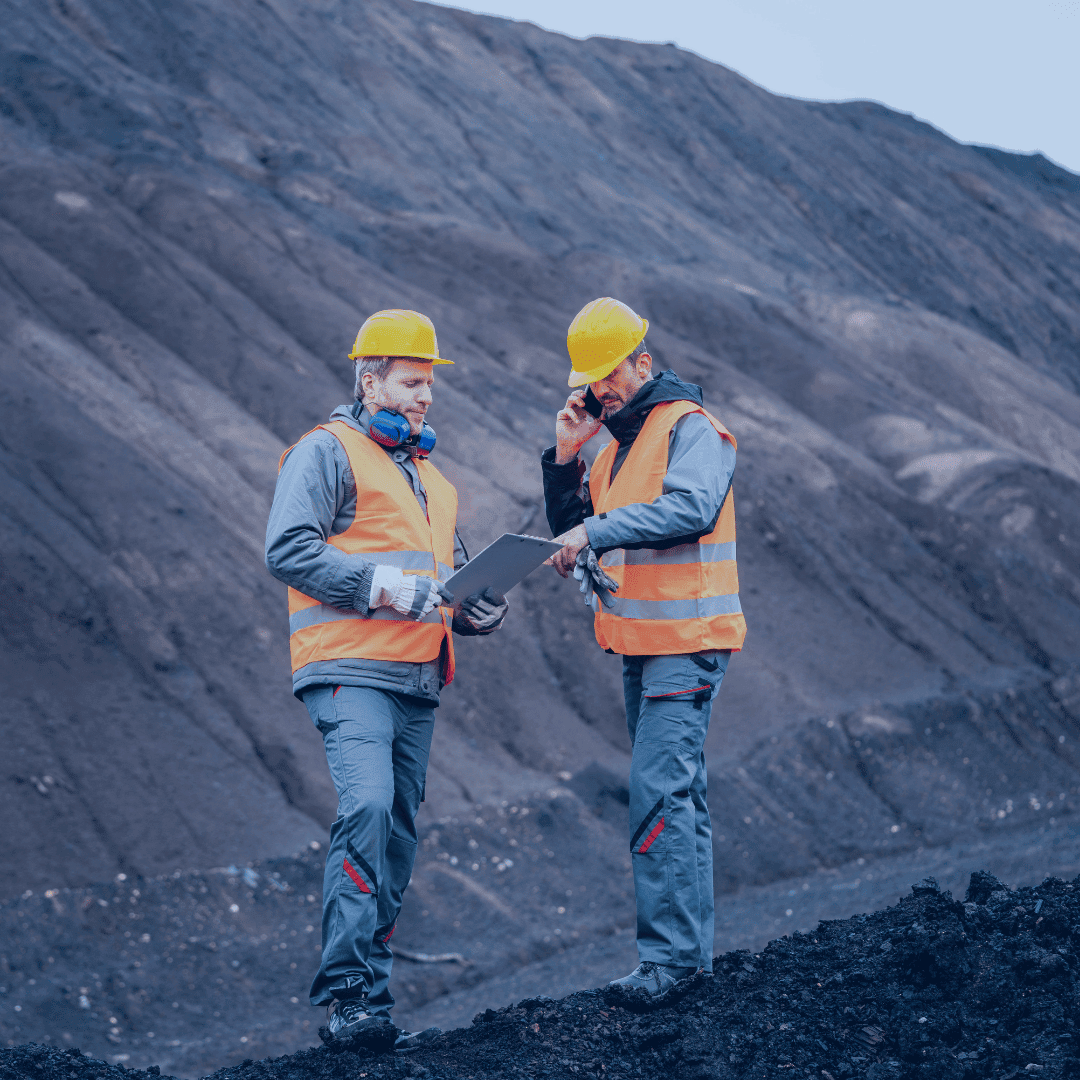
Mine Development Management: Strategy, Feasibility, Operations and Closure

Mine Development Management: Strategy, Feasibility, Operations and Closure

1 Weeks
Professional Level
Certificate Included
Course Content

Available Events

Available Events
CityDatePriceStatus
LisbonPortugal
September 28, 2026
€4,400
Confirmed date
Kuala LumpurMalaysia
October 10, 2026
€4,400
Confirmed date
DubaiUnited Arab Emirates
October 18, 2026
€3,900
Confirmed date
SingaporeSingapore
October 24, 2026
€4,800
Confirmed date
GenevaSwitzerland
October 27, 2026
€4,600
Confirmed date
OnlineOnline
October 29, 2026
€1,790
Confirmed date
ParisFrance
November 6, 2026
€4,600
Confirmed date
TunisTunis
November 8, 2026
€3,900
Confirmed date
IstanbulTurkey
November 25, 2026
€3,900
Confirmed date
AmsterdamNetherlands
December 24, 2026
€4,600
Confirmed date
LondonUnited Kingdom
December 25, 2026
£4,600
Confirmed date

Course Information

Duration

1 Weeks

Category

Mining Courses

Level

Professional Level

Certificate

Included

INTRODUCTION

Mine development is a complex process that requires the integration of geology, engineering, economics, operations, environment, communities, governance, and long-term closure planning. A successful mine project must be technically viable, financially resilient, socially accepted, environmentally responsible, and operationally executable. This program provides a structured learning pathway for project managers, senior engineers, mine managers, technical directors, sustainability teams, and professionals preparing for leadership roles in mining. Participants will learn how the mine project cycle moves from early development strategy through exploration, feasibility studies, design, construction, commissioning, operations, closure, and post-closure responsibilities. The course explains how resource and reserve classification, international standards, and social licence considerations influence project decisions. It also covers how pre-feasibility and definitive feasibility studies are developed and how project controls support scope, schedule, cost, risk, and performance management. Participants will review operational topics including fleet dispatch, maintenance, grade control, reconciliation, geotechnics, mineral processing, and daily production management. Environmental and social modules address impact assessment, tailings, water, air, biodiversity, waste rock, acid drainage, stakeholder engagement, local development, resettlement, rehabilitation, and post-closure monitoring. This program is ideal for professionals who need a full-cycle managerial understanding of mine development from strategic planning to responsible closure.

COURSE OBJECTIVES

Participants will achieve the following objectives by this course:

  • Understand the complete mine development cycle from strategy to post-closure responsibilities.
  • Interpret the relationship between resource classification, feasibility, and project decisions.
  • Coordinate exploration management, feasibility studies, project controls, and economic evaluation.
  • Understand mine design, construction management, commissioning, and operational readiness.
  • Integrate daily operations, fleet dispatch, maintenance, grade control, and reconciliation.
  • Link geotechnical requirements and processing routes with project performance.
  • Evaluate environmental and social impact requirements across the mine project cycle.
  • Integrate tailings, water, air, biodiversity, waste rock, and acid drainage controls.
  • Manage stakeholder engagement, local development, resettlement, rehabilitation, and closure planning.
  • Use key performance indicators and project controls to manage mine development performance.

TARGET AUDIENCE

This program targets a professional audience seeking to improve knowledge and skills:

  • Project managers responsible for mine development, feasibility coordination, execution, and performance control.
  • Senior engineers involved in technical studies, design integration, operations, and development decisions.
  • Mine managers overseeing production, safety, maintenance, grade control, and operational performance.
  • Technical directors reviewing development strategy, economic assumptions, risks, and project governance.
  • Sustainability teams managing environmental, social, stakeholder, and closure requirements.
  • Exploration and resource professionals supporting feasibility and project advancement decisions.
  • Construction and operations leaders preparing mine projects for commissioning and production.
  • Professionals preparing for leadership roles in mining companies, public entities, or consulting organizations.

COURSE OUTLINE

Day 1: Sustainable Mine Development and Project Life Cycle

  • Understanding the complete mine project life cycle.
  • Reviewing exploration, feasibility, construction, operation, and closure stages.
  • Linking sustainable development strategy with project value.
  • Understanding technical, economic, environmental, and social dimensions.
  • Reviewing governance requirements in mine development.
  • Identifying key decision gates across project stages.
  • Understanding social licence to operate.
  • Building an integrated mine development perspective.

Day 2: International Standards, Resources, and Reserves

  • Reviewing international mining project standards.
  • Understanding resource and reserve classification.
  • Linking geological confidence with project decisions.
  • Interpreting reporting requirements and technical documentation.
  • Reviewing reserve conversion and feasibility confidence.
  • Understanding uncertainty in resource and reserve estimates.
  • Connecting classification with investment decision-making.
  • Supporting transparent project communication.

Day 3: Exploration Management and Early Project Definition

  • Understanding exploration strategy and program design.
  • Coordinating mapping, drilling, sampling, and interpretation.
  • Managing exploration budgets, schedules, and risks.
  • Reviewing exploration data quality and technical confidence.
  • Linking exploration outcomes with development options.
  • Defining early project scope and constraints.
  • Preparing projects for feasibility study stages.
  • Supporting early-stage investment screening.

Day 4: Pre-Feasibility and Definitive Feasibility Studies

  • Understanding pre-feasibility study objectives.
  • Reviewing definitive feasibility study requirements.
  • Coordinating geology, mining, processing, environmental, and social inputs.
  • Managing assumptions, uncertainties, and technical risks.
  • Reviewing capital and operating cost estimation.
  • Linking feasibility results with project approval.
  • Preparing study governance and review processes.
  • Building decision-ready feasibility documentation.

Day 5: Economic Evaluation and Project Value

  • Understanding mining project value drivers.
  • Reviewing cash-flow modelling and financial indicators.
  • Interpreting capital intensity and operating cost assumptions.
  • Evaluating commodity price and revenue assumptions.
  • Applying sensitivity and scenario analysis.
  • Linking economic robustness with technical viability.
  • Reviewing project risks affecting value.
  • Supporting investment recommendations with transparent logic.

Day 6: Mine Design and Construction Management

  • Understanding integrated mine design requirements.
  • Reviewing open-pit and underground design considerations.
  • Coordinating infrastructure, access, utilities, and services.
  • Managing construction planning and readiness.
  • Reviewing contractor interfaces and execution risks.
  • Linking design assumptions with constructability.
  • Applying project controls during construction.
  • Preparing transition from construction to operations.

Day 7: Project Controls, Risk, and Performance Governance

  • Understanding scope, schedule, cost, and quality control.
  • Applying project controls to mine development.
  • Building risk registers and mitigation plans.
  • Monitoring schedule progress and cost performance.
  • Managing changes, interfaces, and claims.
  • Using key indicators for project governance.
  • Reporting performance to leadership teams.
  • Strengthening accountability across project execution.

Day 8: Mine Operations and Production Management

  • Understanding daily mine operations workflows.
  • Coordinating excavation, loading, hauling, support, and services.
  • Managing production targets and operational priorities.
  • Reviewing fleet dispatch and equipment utilization.
  • Identifying bottlenecks affecting mine productivity.
  • Linking production planning with safety requirements.
  • Monitoring cost, productivity, and unit performance.
  • Improving operational discipline through performance reviews.

Day 9: Maintenance, Grade Control, and Reconciliation

  • Understanding maintenance strategy and equipment availability.
  • Linking preventive maintenance with production reliability.
  • Reviewing grade control systems and field practices.
  • Managing ore loss, dilution, and material movement.
  • Understanding reconciliation across the mine value chain.
  • Comparing planned and actual production results.
  • Identifying causes of operational variance.
  • Improving decisions through reconciliation insights.

Day 10: Geotechnics and Mining Risk Control

  • Understanding geotechnical requirements in mine development.
  • Reviewing slope, excavation, and ground stability risks.
  • Integrating monitoring into operational risk control.
  • Linking geotechnical design with production plans.
  • Reviewing ground support and instability controls.
  • Understanding geotechnical reporting and escalation.
  • Managing safety risks from ground conditions.
  • Supporting risk-based geotechnical decisions.

Day 11: Mineral Processing and Operational Integration

  • Understanding processing route selection.
  • Linking ore characteristics with processing performance.
  • Reviewing crushing, grinding, separation, and recovery concepts.
  • Understanding plant throughput and bottleneck management.
  • Linking mine production with processing capacity.
  • Reviewing metallurgical recovery and grade impacts.
  • Coordinating mine, plant, and technical teams.
  • Improving value chain performance through integration.

Day 12: Environmental and Social Impact Management

  • Understanding environmental and social impact assessment.
  • Reviewing water, air, biodiversity, and land impacts.
  • Managing waste rock and environmental monitoring obligations.
  • Understanding acid drainage risks and controls.
  • Linking environmental commitments with operational plans.
  • Reviewing permitting and compliance responsibilities.
  • Monitoring environmental performance indicators.
  • Strengthening environmental governance in mine projects.

Day 13: Tailings, Water, Waste, and Monitoring

  • Understanding tailings management technologies and risks.
  • Reviewing tailings storage and operational controls.
  • Managing water balance and mine water systems.
  • Coordinating waste rock placement and monitoring.
  • Reviewing closure considerations for tailings and waste.
  • Understanding emergency preparedness for storage facilities.
  • Applying environmental monitoring and reporting controls.
  • Supporting responsible tailings and waste management.

Day 14: Stakeholder Engagement, Local Development, and Resettlement

  • Understanding stakeholder engagement across mine development.
  • Identifying community expectations and project concerns.
  • Building local development and shared value approaches.
  • Reviewing resettlement principles and social safeguards.
  • Managing grievance mechanisms and communication channels.
  • Linking social risks with project decisions.
  • Supporting social licence through consistent engagement.
  • Integrating social performance into project governance.

Day 15: Progressive Closure, Rehabilitation, and Post-Closure Monitoring

  • Understanding progressive closure and final closure planning.
  • Reviewing rehabilitation objectives and success criteria.
  • Linking closure plans with operational decisions.
  • Managing closure cost estimates and financial provisions.
  • Understanding post-closure monitoring responsibilities.
  • Reviewing lessons from closure case studies.
  • Developing integrated mine development action plans.
  • Presenting strategic recommendations for full-cycle mine management.

TECHNICAL FOCUS AREAS

  • Mine project life cycle and sustainable development strategy.

  • International standards, resource classification, and reserve confidence.

  • Social licence, stakeholder expectations, and governance requirements.

  • Exploration management, study phases, and feasibility coordination.

  • Economic evaluation, project value, and investment decision criteria.

  • Mine design, construction management, and project controls.

  • Daily operations, dispatch, maintenance, grade control, and reconciliation.

  • Geotechnics, ground control, mineral processing, and operational integration.

  • Environmental assessment, water, air, biodiversity, waste rock, and tailings.

  • Closure, rehabilitation, post-closure monitoring, and long-term responsibility.

EXPECTED PROFESSIONAL CAPABILITIES

  • Understand the complete mine development cycle and key decision gates.

  • Coordinate feasibility, operations, sustainability, and closure requirements.

  • Integrate technical, economic, environmental, social, and governance considerations.

  • Use project controls and performance indicators to manage execution.

  • Link operational planning with safety, maintenance, processing, and cost performance.

  • Incorporate stakeholder and sustainability issues into project decisions.

  • Support responsible environmental, tailings, and closure management.

  • Communicate project assumptions, risks, and recommendations to leadership stakeholders.

TRAINING METHODOLOGY

  • Professional instruction supported by mining project examples.

  • Applied case studies across strategy, feasibility, operations, environment, and closure.

  • Group discussions on project decisions and development risks.

  • Practical exercises in feasibility coordination and project controls.

  • Operational performance and key indicator review activities.

  • Environmental and social management case discussions.

  • Closure planning and rehabilitation scenario analysis.

  • Development of integrated mine development recommendations.

COURSE DURATION

Duration: 1 Weeks

This training program is delivered over fifteen intensive training days in a professional applied format, combining executive instruction, applied case studies, project life cycle analysis, feasibility and economic evaluation discussions, operational performance reviews, environmental and social management exercises, closure planning scenarios, project control tools, and integrated decision-making activities for professionals responsible for mine development leadership.

INSTRUCTOR INFORMATION

The course is delivered by an internationally certified expert with extensive practical and consulting experience in mine development management, feasibility studies, mine operations, mineral processing integration, project controls, mining economics, environmental and social governance, tailings and closure planning, stakeholder engagement, sustainability strategy, and advisory work with mining companies, project teams, executives, and technical leadership groups.

FREQUENTLY ASKED QUESTIONS

The course is designed for project managers, senior engineers, mine managers, technical directors, sustainability teams, and professionals preparing for leadership roles.

CONCLUSION

Mine Development Management: Strategy, Feasibility, Operations and Closure provides a comprehensive professional learning experience for leaders and technical professionals responsible for mine project development. The program connects strategy, feasibility, project controls, operations, processing, environmental management, social engagement, and closure into one integrated mine development framework. Participants gain practical tools to coordinate complex project requirements, manage performance, understand risks, and communicate decisions across technical and executive stakeholders. The course supports stronger alignment between project teams, operations, sustainability functions, finance, communities, and leadership groups. It is a valuable program for organizations seeking responsible mine development, stronger project governance, better operational readiness, and long-term value creation.

Mine Development Management: Strategy, Feasibility, Operations and Closure

Register for Course