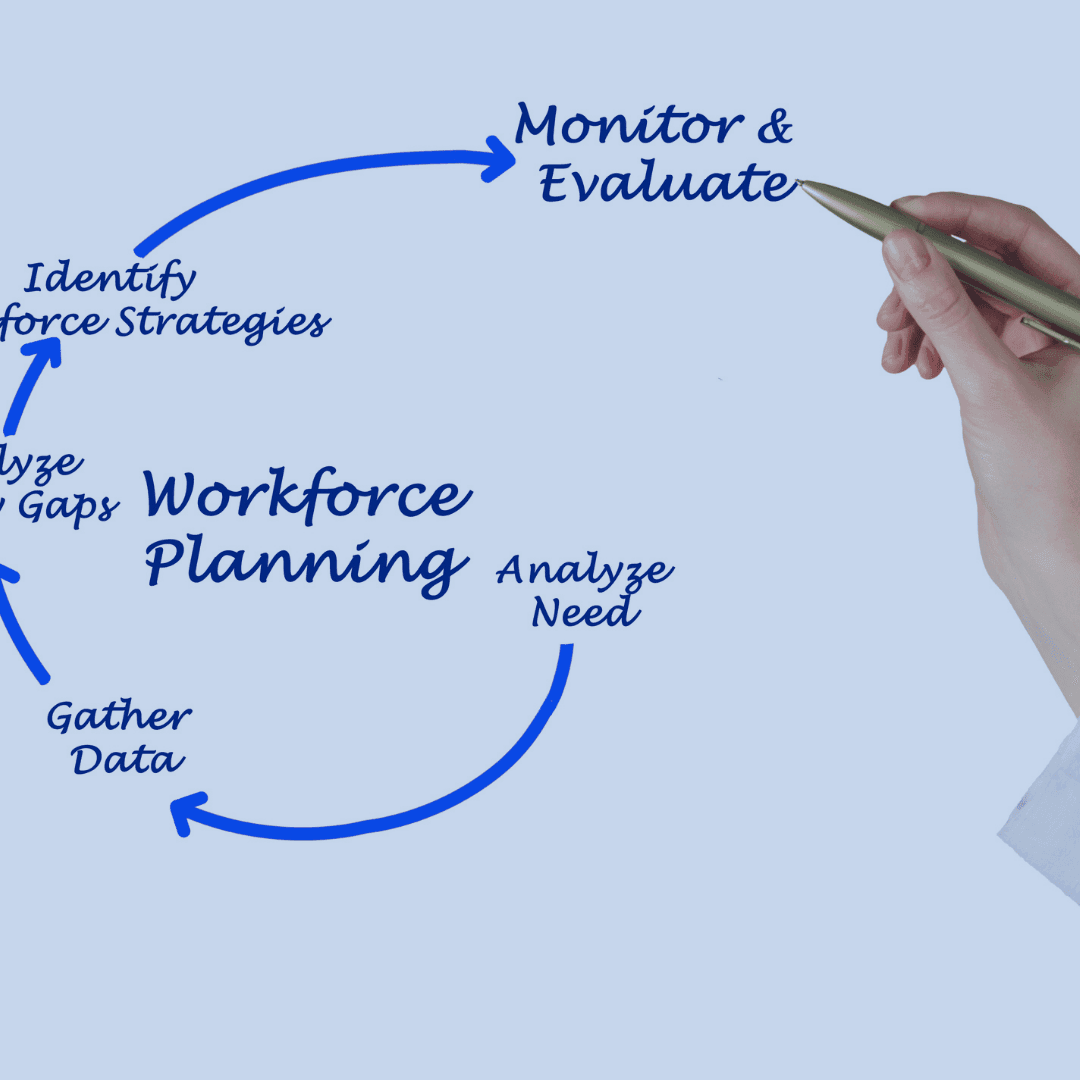
Workforce Planning & Forecasting

Workforce Planning & Forecasting

1 Weeks
Professional Level
Certificate Included
Course Content

Available Events

Available Events
CityDatePriceStatus
GenevaSwitzerland
September 23, 2026
€4,600
Confirmed date
AmsterdamNetherlands
September 26, 2026
€4,600
Confirmed date
LondonUnited Kingdom
October 7, 2026
£4,600
Confirmed date
IstanbulTurkey
November 6, 2026
€3,900
Confirmed date
TunisTunis
November 16, 2026
€3,900
Confirmed date
Kuala LumpurMalaysia
November 17, 2026
€4,400
Confirmed date

Course Information

Duration

1 Weeks

Category

HR Courses

Level

Professional Level

Certificate

Included

INTRODUCTION

Organizations today face increasing pressure to plan their workforce with greater accuracy, agility, and strategic discipline. Workforce Planning & Forecasting enables leaders to understand how many people, which skills, and what structures are required to achieve future objectives. Without a clear workforce plan, organizations may experience talent shortages, excessive labor costs, weak succession pipelines, and reduced operational resilience. This course introduces a practical approach to workforce analysis, demand forecasting, supply assessment, and gap management. Participants will explore how internal data, external labor trends, business forecasts, and organizational strategies influence workforce requirements. The program also demonstrates how workforce planning connects HR with finance, operations, risk management, and executive decision-making. Special attention is given to scenario planning, skills mapping, workforce segmentation, and strategic talent investment. The course combines professional frameworks with hands-on tools that can be applied immediately in corporate environments. It prepares participants to transform workforce planning from an administrative process into a strategic capability.

COURSE OBJECTIVES

Participants will achieve the following objectives by this course:

  • Understand the strategic role of workforce planning in achieving organizational objectives.
  • Analyze current workforce capacity, structure, skills, productivity, and demographic trends.
  • Forecast future workforce demand using business plans, growth targets, and operational drivers.
  • Assess internal and external talent supply to identify risks and opportunities.
  • Identify workforce gaps related to headcount, capability, cost, leadership, and critical roles.
  • Develop practical workforce planning models aligned with business and HR strategy.
  • Apply scenario planning techniques to prepare for uncertainty and organizational change.
  • Use workforce analytics to support evidence-based decisions and executive reporting.
  • Design action plans for recruitment, development, redeployment, succession, and retention.
  • Measure workforce planning effectiveness through relevant performance indicators and outcomes.

TARGET AUDIENCE

This program targets a professional audience seeking to improve knowledge and skills:

  • Human resource managers responsible for strategic workforce planning and talent decisions.
  • HR business partners supporting departments with workforce analysis and planning.
  • Talent acquisition leaders managing future hiring needs and workforce pipelines.
  • Organizational development professionals focused on capability building and transformation.
  • Finance and planning managers involved in headcount budgeting and labor cost control.
  • Operations managers responsible for workforce productivity, capacity, and resource allocation.
  • Department heads seeking better alignment between people, workload, and business priorities.
  • Succession planning and talent management specialists preparing future leadership pipelines.
  • Consultants supporting clients in HR strategy, workforce analytics, and organizational design.
  • Executives seeking stronger visibility into workforce risks, costs, and future talent needs.

COURSE OUTLINE

Day 1: Strategic Foundations of Workforce Planning

  • Define workforce planning and its strategic business value.
  • Connect workforce planning with corporate strategy and performance.
  • Identify workforce planning roles, stakeholders, and governance responsibilities.
  • Analyze the relationship between workforce planning and HR strategy.
  • Review workforce planning maturity levels and organizational readiness.
  • Understand workforce segmentation by roles, skills, and business impact.
  • Explore internal and external drivers affecting workforce requirements.
  • Establish clear workforce planning principles and success criteria.

Day 2: Workforce Analysis and Current State Assessment

  • Collect workforce data from reliable internal HR systems.
  • Analyze headcount, roles, demographics, skills, and employment types.
  • Evaluate productivity, workload, utilization, and workforce efficiency indicators.
  • Identify critical roles and business-sensitive workforce segments.
  • Assess turnover, retirement risk, absenteeism, and mobility patterns.
  • Map current skills against operational and strategic requirements.
  • Interpret workforce cost structures and budget implications.
  • Build a current workforce profile for planning decisions.

Day 3: Demand Forecasting and Scenario Planning

  • Translate business strategy into future workforce demand.
  • Use workload, revenue, growth, and productivity forecasting drivers.
  • Apply quantitative and qualitative workforce forecasting methods.
  • Develop scenarios for expansion, restructuring, automation, and market change.
  • Estimate future headcount, skills, capabilities, and leadership needs.
  • Assess technology, outsourcing, and process improvement impacts.
  • Validate workforce forecasts with business leaders and financial assumptions.
  • Prioritize workforce demand based on risk and strategic importance.

Day 4: Supply Assessment and Gap Analysis

  • Assess internal talent supply, readiness, and mobility potential.
  • Analyze external labor market availability and competition.
  • Compare future demand with projected workforce supply.
  • Identify gaps in numbers, skills, performance, cost, and leadership.
  • Evaluate workforce risks linked to shortages and surplus capacity.
  • Prioritize workforce gaps by urgency, impact, and feasibility.
  • Develop gap-closing strategies across build, buy, borrow, and redesign.
  • Align workforce actions with budgets, timelines, and business priorities.

Day 5: Workforce Planning Implementation and Measurement

  • Build an integrated workforce planning action plan.
  • Link workforce plans with recruitment, learning, succession, and retention.
  • Establish workforce planning governance, ownership, and review cycles.
  • Create executive dashboards and workforce planning reports.
  • Define workforce planning performance indicators and success measures.
  • Communicate workforce plans to leaders and key stakeholders.
  • Manage change during workforce restructuring and capability shifts.
  • Present a practical workforce planning framework for implementation.

COURSE DURATION

Duration: 1 Weeks

The course is delivered over five intensive training days and can be offered in classroom, online, or blended formats depending on organizational needs and participant availability. Each day combines expert-led instruction, practical discussions, workforce planning tools, applied exercises, case analysis, and group activities designed to help participants convert workforce planning concepts into practical workplace applications.

INSTRUCTOR INFORMATION

The training will be delivered by a team of experts specialized in human resource strategy, workforce planning, workforce analytics, organizational development, talent management, and business transformation. The instructors bring practical experience in supporting organizations to design workforce models, forecast future talent needs, analyze capability gaps, build strategic HR plans, and align people resources with long-term business objectives.

FREQUENTLY ASKED QUESTIONS

This course is designed for HR professionals, managers, planners, consultants, and leaders involved in workforce decisions.

CONCLUSION

Workforce Planning & Forecasting helps organizations prepare for the future with stronger visibility, discipline, and confidence. The course enables participants to connect workforce decisions with strategy, performance, cost, and organizational resilience. It provides practical tools for analyzing current workforce conditions, forecasting future needs, and closing critical capability gaps. Participants leave with a structured approach that supports better HR decisions and stronger executive conversations. This program builds the capability needed to turn workforce planning into a strategic driver of sustainable success.

Workforce Planning & Forecasting

Register for Course